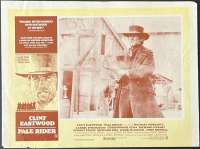
Note:This Pale Rider Photosheet Lobby originated from an original Pale Ride Photosheet poster that was solely made in Australia. Photosheet posters had six different images from the film it was advertising and the image was approximately the size of a 11x14 Lobby Card. Cinema owners would cut the poster up and use the individual images as more affordable Lobby Cards. Sometimes these images were different to the actual heavier stock Lobby Cards and sometimes they were not. For collectors, these Photosheet Lobbies on light paper poster stock represent an affordable way of owning a piece of cinema history.
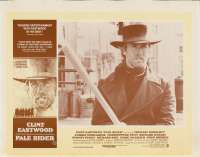
Note:This Pale Rider Photosheet Lobby originated from an original Pale Ride Photosheet poster that was solely made in Australia. Photosheet posters had six different images from the film it was advertising and the image was approximately the size of a 11x14 Lobby Card. Cinema owners would cut the poster up and use the individual images as more affordable Lobby Cards. Sometimes these images were different to the actual heavier stock Lobby Cards and sometimes they were not. For collectors, these Photosheet Lobbies on light paper poster stock represent an affordable way of owning a piece of cinema history.
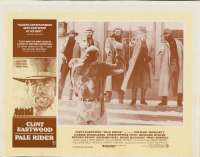
Note:This Pale Rider Photosheet Lobby originated from an original Pale Ride Photosheet poster that was solely made in Australia. Photosheet posters had six different images from the film it was advertising and the image was approximately the size of a 11x14 Lobby Card. Cinema owners would cut the poster up and use the individual images as more affordable Lobby Cards. Sometimes these images were different to the actual heavier stock Lobby Cards and sometimes they were not. For collectors, these Photosheet Lobbies on light paper poster stock represent an affordable way of owning a piece of cinema history.
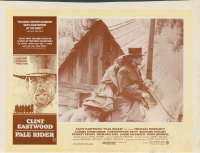
Note:This Pale Rider Photosheet Lobby originated from an original Pale Ride Photosheet poster that was solely made in Australia. Photosheet posters had six different images from the film it was advertising and the image was approximately the size of a 11x14 Lobby Card. Cinema owners would cut the poster up and use the individual images as more affordable Lobby Cards. Sometimes these images were different to the actual heavier stock Lobby Cards and sometimes they were not. For collectors, these Photosheet Lobbies on light paper poster stock represent an affordable way of owning a piece of cinema history.
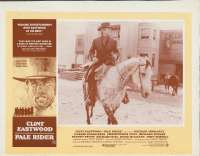
Note:This Pale Rider Photosheet Lobby originated from an original Pale Ride Photosheet poster that was solely made in Australia. Photosheet posters had six different images from the film it was advertising and the image was approximately the size of a 11x14 Lobby Card. Cinema owners would cut the poster up and use the individual images as more affordable Lobby Cards. Sometimes these images were different to the actual heavier stock Lobby Cards and sometimes they were not. For collectors, these Photosheet Lobbies on light paper poster stock represent an affordable way of owning a piece of cinema history.
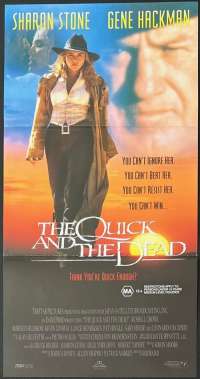
Daybill Poster.The Quick and the Dead is a 1995 American revisionist Western film directed by Sam Raimi, and starring Sharon Stone, Gene Hackman, Russell Crowe, Leonardo DiCaprio, Gary Sinise and Lance Henriksen. The story focuses on "The Lady" (Stone), a gunfighter who rides into the frontier town of Redemption, controlled by John Herod (Hackman). The Lady joins a deadly duelling competition as a way of exacting revenge for her father's death. This was Russell Crowe's American Western film debut and was Woody Strode's final performance (the film is dedicated to him), as well as the last theatrical release of Roberts Blossom, who died in 2011.
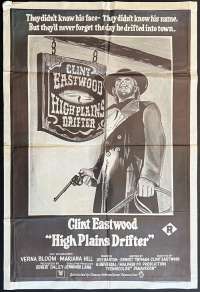
One Sheet Poster with Ron Lesser Design in the rare alternate brown art.High Plains Drifter is a 1973 American Western film directed by and starring Clint Eastwood, written by Ernest Tidyman, and produced by Robert Daley for Malpaso Company and Universal Pictures. Eastwood plays a mysterious, prepotent stranger, meting out justice in a corrupt frontier mining town. The film was influenced by the work of Eastwood's two major collaborators, film directors Sergio Leone and Don Siegel. The film was shot on location on the shores of Mono Lake, California. Dee Barton wrote the film score. The film was critically acclaimed at the time of its initial release and remains popular today. The graveyard set featured in the film's final scene included tombstones inscribed "Sergio Leone" and "Don Siegel" as a humorous tribute to the two influential directors. Universal released the R-rated High Plains Drifter in the United States in April 1973, and the film eventually grossed $15.7 million domestically, ultimately making it the sixth-highest grossing Western in North America in the decade of the 1970s and the 20th highest-grossing film released in 1973. The film was also well received by many critics.
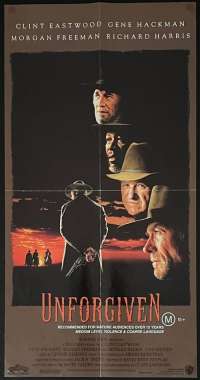
Rare Daybill Poster. By the 1990's Daybill posters were being made in fewer numbers. Consequently to have a daybill available for this film is quite rare.Unforgiven is a 1992 American revisionist Western film produced and directed by Clint Eastwood and written by David Peoples (Blade Runner). The film portrays William Munny, an aging outlaw and killer who takes on one more job, years after he had turned to farming. The film stars Eastwood in the lead role, with Gene Hackman, Morgan Freeman and Richard Harris. Eastwood stated that the film would be his last Western for fear of repeating himself or imitating someone else's work. The concept for the film dated to 1976, when it was developed under the titles The Cut-Whore Killings and The William Munny Killings. By Eastwood's own recollection he was given the script in the "early 80s" although he did not immediately pursue it, because, according to him, "I thought I should do some other things first". Unforgiven grossed over $159 million on a budget of $14.4 million and received widespread critical acclaim, with praise for the acting (particularly from Eastwood and Hackman), directing, editing, themes and cinematography. The film won four Academy Awards: Best Picture and Best Director for Clint Eastwood, Best Supporting Actor for Gene Hackman, and Best Film Editing for editor Joel Cox. Eastwood dedicated the film to directors and mentors Sergio Leone and Don Siegel.
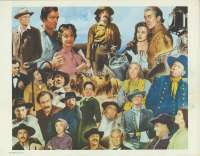
Rare USA Title Lobby Card 11x14.How the West Was Won is a 1962 American epic Western film directed by Henry Hathaway (who directs three out of the five chapters involving the same family), John Ford and George Marshall, produced by Bernard Smith, written by James R. Webb, and narrated by Spencer Tracy. The film stars an ensemble cast consisting of (in alphabetical order) Carroll Baker, Lee J. Cobb, Henry Fonda, Carolyn Jones, Karl Malden, Gregory Peck, George Peppard, Robert Preston, Debbie Reynolds, James Stewart, Eli Wallach, John Wayne and Richard Widmark. How the West Was Won is widely considered one of Hollywood's greatest epics. The film received widespread critical acclaim and was a box office success, grossing $50 million on a budget of $15 million. At the 36th Academy Awards, it earned eight nominations.
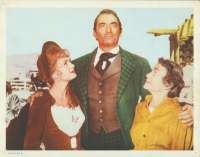
USA Lobby Card 11x14.How the West Was Won is a 1962 American epic Western film directed by Henry Hathaway (who directs three out of the five chapters involving the same family), John Ford and George Marshall, produced by Bernard Smith, written by James R. Webb, and narrated by Spencer Tracy. The film stars an ensemble cast consisting of (in alphabetical order) Carroll Baker, Lee J. Cobb, Henry Fonda, Carolyn Jones, Karl Malden, Gregory Peck, George Peppard, Robert Preston, Debbie Reynolds, James Stewart, Eli Wallach, John Wayne and Richard Widmark. How the West Was Won is widely considered one of Hollywood's greatest epics. The film received widespread critical acclaim and was a box office success, grossing $50 million on a budget of $15 million. At the 36th Academy Awards, it earned eight nominations.
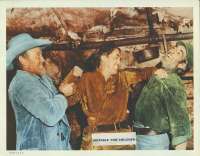
USA Lobby Card 11x14.How the West Was Won is a 1962 American epic Western film directed by Henry Hathaway (who directs three out of the five chapters involving the same family), John Ford and George Marshall, produced by Bernard Smith, written by James R. Webb, and narrated by Spencer Tracy. The film stars an ensemble cast consisting of (in alphabetical order) Carroll Baker, Lee J. Cobb, Henry Fonda, Carolyn Jones, Karl Malden, Gregory Peck, George Peppard, Robert Preston, Debbie Reynolds, James Stewart, Eli Wallach, John Wayne and Richard Widmark. How the West Was Won is widely considered one of Hollywood's greatest epics. The film received widespread critical acclaim and was a box office success, grossing $50 million on a budget of $15 million. At the 36th Academy Awards, it earned eight nominations.
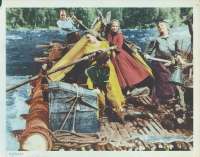
USA Lobby Card 11x14.How the West Was Won is a 1962 American epic Western film directed by Henry Hathaway (who directs three out of the five chapters involving the same family), John Ford and George Marshall, produced by Bernard Smith, written by James R. Webb, and narrated by Spencer Tracy. The film stars an ensemble cast consisting of (in alphabetical order) Carroll Baker, Lee J. Cobb, Henry Fonda, Carolyn Jones, Karl Malden, Gregory Peck, George Peppard, Robert Preston, Debbie Reynolds, James Stewart, Eli Wallach, John Wayne and Richard Widmark. How the West Was Won is widely considered one of Hollywood's greatest epics. The film received widespread critical acclaim and was a box office success, grossing $50 million on a budget of $15 million. At the 36th Academy Awards, it earned eight nominations.
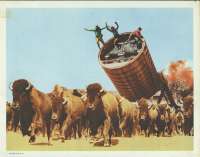
USA Lobby Card 11x14.How the West Was Won is a 1962 American epic Western film directed by Henry Hathaway (who directs three out of the five chapters involving the same family), John Ford and George Marshall, produced by Bernard Smith, written by James R. Webb, and narrated by Spencer Tracy. The film stars an ensemble cast consisting of (in alphabetical order) Carroll Baker, Lee J. Cobb, Henry Fonda, Carolyn Jones, Karl Malden, Gregory Peck, George Peppard, Robert Preston, Debbie Reynolds, James Stewart, Eli Wallach, John Wayne and Richard Widmark. How the West Was Won is widely considered one of Hollywood's greatest epics. The film received widespread critical acclaim and was a box office success, grossing $50 million on a budget of $15 million. At the 36th Academy Awards, it earned eight nominations.
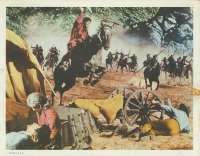
USA Lobby Card 11x14.How the West Was Won is a 1962 American epic Western film directed by Henry Hathaway (who directs three out of the five chapters involving the same family), John Ford and George Marshall, produced by Bernard Smith, written by James R. Webb, and narrated by Spencer Tracy. The film stars an ensemble cast consisting of (in alphabetical order) Carroll Baker, Lee J. Cobb, Henry Fonda, Carolyn Jones, Karl Malden, Gregory Peck, George Peppard, Robert Preston, Debbie Reynolds, James Stewart, Eli Wallach, John Wayne and Richard Widmark. How the West Was Won is widely considered one of Hollywood's greatest epics. The film received widespread critical acclaim and was a box office success, grossing $50 million on a budget of $15 million. At the 36th Academy Awards, it earned eight nominations.
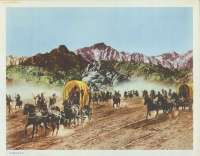
USA Lobby Card 11x14.How the West Was Won is a 1962 American epic Western film directed by Henry Hathaway (who directs three out of the five chapters involving the same family), John Ford and George Marshall, produced by Bernard Smith, written by James R. Webb, and narrated by Spencer Tracy. The film stars an ensemble cast consisting of (in alphabetical order) Carroll Baker, Lee J. Cobb, Henry Fonda, Carolyn Jones, Karl Malden, Gregory Peck, George Peppard, Robert Preston, Debbie Reynolds, James Stewart, Eli Wallach, John Wayne and Richard Widmark. How the West Was Won is widely considered one of Hollywood's greatest epics. The film received widespread critical acclaim and was a box office success, grossing $50 million on a budget of $15 million. At the 36th Academy Awards, it earned eight nominations.
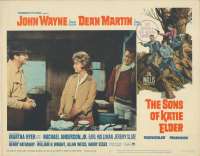
USA Lobby Card 11x14 Original.The Sons of Katie Elder is a 1965 American Western film in Panavision, directed by Henry Hathaway and starring John Wayne, Dean Martin, George Kennedy and Dennis Hopper. The storyline went as follows:The Elder boys return to Clearwater, Texas for their Mother's funeral. John, the eldest, is a well-known gunfighter and trouble follows him wherever he goes. The boys try to get their ranch back from the town's gunsmith who won it from their father in a card game, after which he was murdered. Troubles come, however, just because they carry the Elder name.
| PO Box 491 Sherwood, 4075, Brisbane Queensland, Australia |
|
| 0419 736 441 | |
| MON - FRI - 9am to 5pm | |
| This email address is being protected from spambots. You need JavaScript enabled to view it. |